
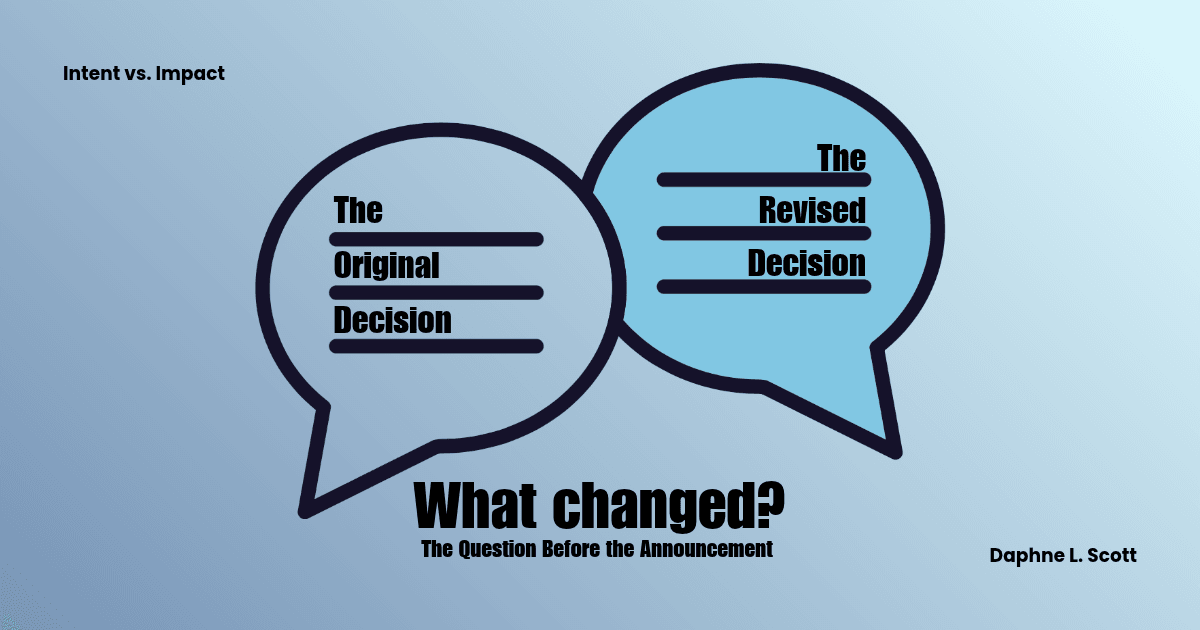
When leadership reverses a major decision, the communications responsibility extends beyond announcing the change. The organization must account for what it previously told stakeholders and explain how the new decision relates to its earlier position. Nvidia's decision to reinstate Jensen Huang as CEO offers a timely example.
On November 17, the company's board told investors that it did not intend to reinstate Huang. Six days later, Nvidia announced that he was returning to the position.
The board explained that additional discussions with Huang had satisfied its concerns about his candor and ability to lead. It also cited input from senior U.S. government officials regarding national security concerns. The company announced additional oversight measures while confirming that an independent investigation would continue.
When an organization changes a position it previously communicated with certainty, its communications advisors must help leadership establish why the decision changed and prepare for how stakeholders may interpret the reversal.
Start With the Original Communication
When a leadership team decides to change direction, there is a natural tendency to concentrate on explaining the new decision. I would begin by examining what the organization has already told people.
A subsequent decision can change the organization's direction, but it does not automatically erase earlier statements or the assumptions stakeholders formed from them. I would review the original communication alongside the proposed announcement to identify apparent contradictions that leadership needs to address before communicating the reversal.
Consider a company that announces a restructuring because its operating model is no longer financially sustainable. If leadership subsequently decides to retain much of that structure, the communications advisor should understand what changed. Did new financial information alter the assessment? Did the company reconsider the operational consequences? Has leadership decided to accept a different level of financial risk?
The purpose of this review is not to manufacture a more persuasive justification. It is to determine whether the rationale is clear enough to communicate responsibly. If executives have different understandings of why the decision changed, that disagreement deserves attention before the announcement is drafted.
Distinguish What Leadership Knows From What It Believes
Communications professionals are frequently asked to convey confidence when leadership doesn’t have every answer. That responsibility becomes more difficult when a decision changes before related matters have been settled.
Nvidia's announcement illustrates the distinction. The board expressed renewed confidence in Huang and described the discussions that informed its reconsideration. It also confirmed that its independent investigation would continue.
Communications advisors should help executives explain the basis for a decision without implying that every concern has been addressed. Responsible transparency does not require revealing confidential information. It requires accuracy about what can be said and restraint where certainty is not justified.
Prepare Leaders for Different Audience Reactions
A communications plan should not assume that everyone will interpret a reversal through the same lens.
Employees may focus on what the decision says about organizational standards. Investors may be more concerned about governance and continuity. Customers and business partners may want to know whether the change affects existing commitments.
I would advise leadership to anticipate how different audiences might interpret the reversal before determining the communication sequence. That assessment should inform who delivers the message and how the organization prepares to address stakeholder concerns.
An executive announcement may establish the company's position, but employees may still need an opportunity to hear directly from leadership. Managers may need guidance on answering questions without speculating about unresolved matters.
These considerations influence more than the choice of communication channels. They help determine whether the people responsible for explaining the decision have enough context to respond accurately.
The underlying explanation must remain consistent. Audience-specific communication should address relevant concerns without creating competing versions of the decision.
Test Commitments Before Communicating Them
Nvidia has announced additional board oversight and plans to appoint a chief compliance officer while its independent investigation continues. Those measures are significant, but communicating them responsibly requires clarity about what they are intended to accomplish and how their effectiveness will be assessed.
For communications advisors, such commitments require scrutiny before they are included in an announcement.
If leadership intends to promise greater accountability, what will that mean in practice? Who will be responsible for implementation? How will stakeholders know whether the promised changes have occurred?
Communications professionals can help executives identify where proposed language creates expectations that the organization may not yet be prepared to meet.
An announcement may generate initial confidence, but subsequent actions will determine whether that confidence is justified.
Communications Advice Belongs in the Decision Process
An experienced communications advisor can identify weaknesses in leadership's reasoning before those weaknesses become public commitments.
That assessment may reveal questions executives have not adequately considered or confirm that the decision is well supported. Either outcome gives leadership valuable information while there is still an opportunity to act on it.
The value of strategic communications advice is not in preventing criticism. It is in helping executives recognize potential problems while they still have an opportunity to address them.
Strategic Communications Advisory
I advise leadership teams navigating consequential organizational change, particularly when decisions carry significant communications and reputational implications.
My Change Readiness Sprint helps leaders assess communication risks and prepare for stakeholder questions before a high-stakes announcement.
Learn more about the Change Readiness Sprint.